
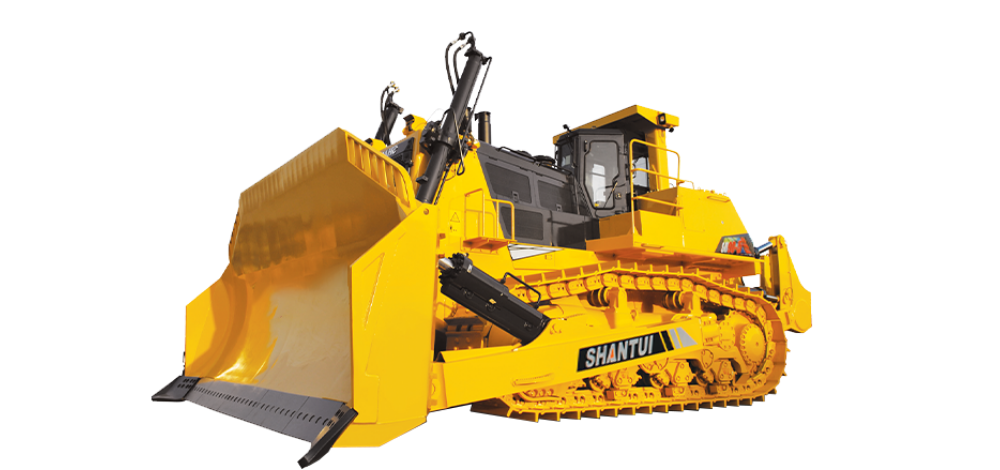
Shantui Bulldozer Reliability: A Field Review | Heavy Equipment Insights Field Reviews Shantui Bulldozer Reliability: A Field Review After Years of Real-World Use Heavy Equipment Editorial • July 17, 2026 • 6 min read If you’ve spent any time shopping the used heavy equipment market, you’ve probably run into Shantui. The Chinese manufacturer has become impossible to ignore — you’ll see Shantui equipment for sale on nearly every import dealer’s lot, often at 20–40% below the price of a comparable Caterpillar or Komatsu machine. But price alone doesn’t tell you whether a machine will still be running in five years. This review pulls together operator field experience, common failure points, and how Shantui stacks up against the brands contractors already trust, so you can decide whether a Shantui bulldozer belongs in your fleet. Who Is Shantui, Anyway? Shantui Construction Machinery traces its roots back to a state-owned Chinese manufacturer founded in 1980, and it has since grown into one of the world’s larger heavy equipment producers by volume, with bulldozers as its flagship product line. The company also builds excavators, wheel loaders, road rollers, and motor graders, but bulldozers remain what it’s best known for internationally. A key detail for reliability: Some of Shantui’s earlier and mid-range dozer designs share DNA with Komatsu platforms, a legacy of past technology-transfer agreements. That heritage shows up in the drivetrain layout and general mechanical simplicity of models like the SD16 and SD22, which is part of why long-time owners describe them as straightforward to work on. Shantui Bulldozer Reliability: What Field Experience Actually Shows This is the part most buyers actually want to know, and the honest answer is “it depends more on maintenance discipline than on the badge on the hood.” The Good News From Operators Durability: Owners who’ve run older Shantui dozers for two decades or more report that most of the trouble they’ve encountered has been ordinary wear and tear rather than catastrophic failures. Serviceability: The mechanical layout on the mid-size models (SD16/SD22 range) is simple enough that a competent bush mechanic can diagnose and fix most problems without dealer support. Structural Integrity: Undercarriage and structural components generally hold up well in rough terrain, according to job-site feedback from mining and earthmoving operations. Where Problems Show Up Overheating: Transmission overheating is one of the most commonly reported issues, particularly when operators run non-approved hydraulic fluid or skip scheduled fluid changes. Hydraulics: Sluggish blade response shows up in the same maintenance-related bucket — it’s more often a hydraulic oil or filter issue than a design flaw. Parts Risk: Parts authenticity is a recurring theme. Because Shantui parts get counterfeited in some markets, machines serviced with non-genuine components are far more prone to premature failure. Component-Level Troubleshooting On engine, transmission, and steering-clutch systems, issues follow a fairly formulaic pattern: rough running when cold usually traces back to air in the hydraulic system, fuel starvation, or filter blockage, while power loss when hot points toward the torque converter, gearbox, steering clutch, or brake system. The practical takeaway: Shantui reliability is real, but it’s conditional. Stick to the recommended 250-hour initial service and 500-hour comprehensive inspection intervals, use genuine parts and approved hydraulic oil, and the failure modes people complain about mostly disappear. Shantui Machinery Lineup: Where the SD22 and SD90 Fit Shantui’s dozer range spans from compact 17-ton machines up to some genuinely enormous mining-class iron, and understanding where a given model sits helps set realistic expectations. SD22 Shantui SD22 (The Workhorse) This is the workhorse of the mid-range lineup, running roughly a 162 kW engine and an operating weight around 23 tons. It’s positioned as the versatile all-rounder: strong enough for foundation and earthmoving work, but still maneuverable and simple enough for smaller contractors to own and maintain without a large service department. If you’re looking at Shantui heavy equipment for the first time, the SD22 is usually the sensible entry point. SD90 Shantui SD90 (The Heavyweight Flagship) This is the other end of the spectrum entirely. The SD90-C5 is Shantui’s flagship large-class bulldozer, tipping the scales at over 106 tonnes with a Cummins-sourced engine rated around 708 kW (roughly 950 hp), putting it in the same weight class as machines like the Caterpillar D11. It’s built for large open-pit mines and major earthmoving projects, not general contracting work. Features like an electronically controlled transmission and full-cab monitoring reflect that it’s aimed at large fleet operators rather than owner-operators. Between those two sits the rest of the range — SD16 for light work, SD32 for large-scale mining and earthmoving that doesn’t need SD90-class size — giving buyers a genuinely broad set of options depending on job scope. Shantui vs Caterpillar: The Real Trade-Off This comparison comes up constantly, and it’s worth being direct about it rather than picking a side. Category Caterpillar Wins Shantui Wins Technology & Control More advanced electronic grading and blade-control systems. Mechanical simplicity that makes field repairs easier when isolated. Financials Stronger resale value and a predictable used-equipment market. Purchase price is routinely 20–40% lower than an equivalent Cat. Support Network Deeper dealer and parts networks in most Western markets. Lower cost-per-hour of ownership for self-reliant operators. The honest summary most experienced buyers land on: if your operation is running high-production mining or infrastructure work with a big service budget and needs the latest automated grading tech, Caterpillar’s ecosystem still generally justifies the premium. If you’re a smaller contractor or working in a region where you’ll be doing your own wrenching, a Shantui bulldozer can do the same job for meaningfully less money, provided you commit to proper maintenance. Buying Used Shantui Equipment: What to Check First If you’re shopping listings for used Shantui equipment, a few checks go a long way toward avoiding reliability headaches: ✓ Verify Service History: Ask for maintenance records, specifically whether the 250-hour and 500-hour service intervals were followed. ✓ Check Parts Authenticity: A machine serviced exclusively with genuine Shantui parts is a materially safer bet than one with an unknown parts
Shantui SD Series Bulldozer Maintenance Schedule
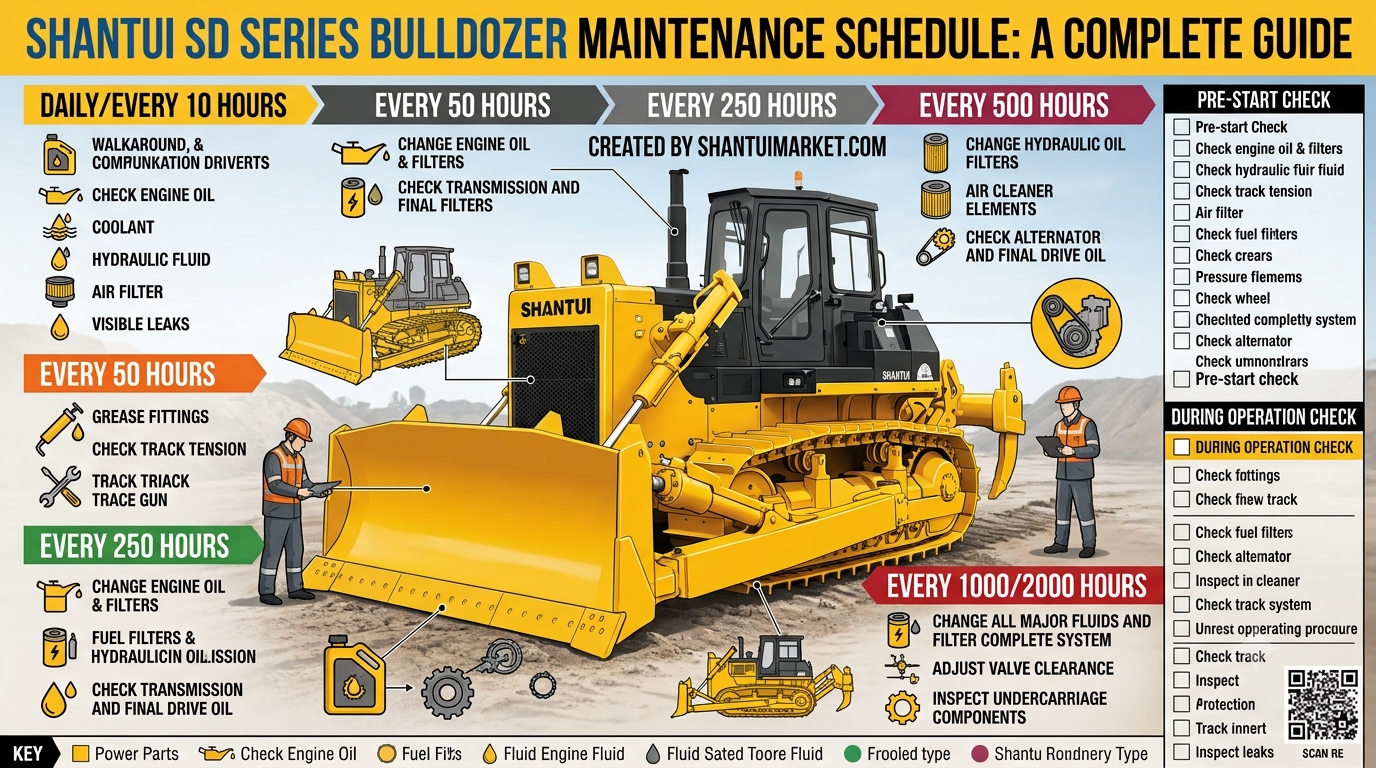
Shantui SD Series Bulldozer Maintenance Schedule: Complete Engineering Guide Field Engineering Insights Shantui SD Series Bulldozer Maintenance Schedule: A Complete Guide Published by Heavy Equipment Technical Brief • Technical Expert Series In heavy earthmoving and high-bulk earth-shifting operations, few machines match the structural resilience and torque density of the Shantui SD Series—specifically the ubiquitous SD16, SD22, and SD32 platforms. Powered by field-proven Weichai or Cummins powerplants and driven through advanced hydraulic torque converters and planetary power-shift transmissions, these machines are engineered for brutal duty cycles. However, mechanical resilience is entirely dependent on rigid fluid dynamics, thermodynamic management, and tribological care. Waiting for a hydraulic line to burst or a final drive to lock up is an expensive way to run an operation. This guide bypasses generalities to deliver an aggressive, technically precise maintenance architecture for the Shantui SD Series, focusing on specific engineering friction points, clearance profiles, and fluid specs. 1. The Primary Tribological Architecture: Fluid Specifications Before executing any maintenance interval, you must ensure that lubricants match the extreme shear stresses and thermal ranges encountered by planetary gear trains and high-pressure hydraulic circuits. Shantui architectures utilize dedicated compartments requiring distinct additive packages: Compartment / System Fluid Classification Viscosity Grade (Ambient) Key Technical Metric / Additive Profile Diesel Engine API CH-4 / CI-4 Heavy Duty 15W-40 (-15°C to 40°C) High TBN (Total Base Number) for sulfur-heavy fuel handling. Hydraulic System ISO L-HM Anti-Wear Hydraulic Fluid ISO VG 46 / VG 68 Minimum 100 Viscosity Index; zinc-based anti-wear (AW) chemistry. Torque Converter & Transmission Caterpillar TO-4 / Allison C-4 Spec SAE 10W or SAE 30 Controlled friction coefficients for dynamic clutch discs; zero modifiers. Final Drive & Bevel Gear Cases API GL-5 Heavy Duty Gear Oil SAE 85W-140 / 80W-90 Extreme Pressure (EP) additives for shock loading and spur-gear protection. ⚠️ Engineering Warning: TO-4 vs. GL-5 Compatibility Failure Never introduce API GL-5 gear oil into the power-shift transmission or central steering clutch compartments. The sulfur-phosphorus EP additives in GL-5 will rapidly corrode the bronze and copper-alloy sintered friction discs within the clutch packs, inducing premature glazing, slippage, and eventual catastrophic dynamic lock-up. 2. Operational Intervals and Technical Actions Daily / 10-Hour Shift Inspections (Pre-Start & Warm-Up) Daily maintenance is not a “walkaround”; it is a localized inspection to prevent systemic failures caused by cold-start starvation or slow fluid leakage. Track Tension Visual Assessment: Inspect the sag of the track chain between the carrier roller and the front idler. Visual sag should measure between 30mm and 50mm. If sag exceeds 50mm, the track will “snake,” accelerating wear on track guide links and sprocket teeth. Hydraulic and Transmission Sump Checks: Verify levels via the sight glasses on the right-hand chassis flank. Fluid must be checked at operating temperature with the blade and ripper dropped flat to the ground (ensuring zero pressure in the cylinders). Engine Intake Air Cleaner Dust Valve: Squeeze the rubber vacuator valve on the Donaldson-style air cleaner housing to eject accumulated particulate matter. Monitor the restriction indicator on the dash panel; if the red signal latches, immediate primary element servicing is required. 50-Hour Operational Interval (Weekly Hard Check) Cross-Shaft / Equalizer Bar Pin Lubrication: The equalizer bar pin experiences massive oscillatory loads. Pump lithium-based grease (NLGI No. 2 with 3% Molybdenum Disulfide) into the center pin housing and end-pin bush assemblies until clean grease purges from the lip seals. Drive Shaft Spline and Universal Joints: Inject grease into the main drive shaft slip joint and U-joints. A dry slip joint transfers axial thrust loads straight into the torque converter output bearing, causing premature seal weeping and bearing pitting. 250-Hour Critical Servicing (First Major PM Boundary) The 250-hour mark is where chemical degradation of engine oil becomes a factor due to soot loading and shear breakdown. Engine Lubrication Evacuation: Drain engine oil hot. Extract the spin-on full-flow filters and bypass filters. Inspect the filter pleats for non-ferrous bronze flakes (indicating wrist pin/rod bearing wear) or magnetic iron filings (indicating ring/liner wear). Final Drive Oil Level and Magnetic Plug Inspection: Remove the oil level plug on both the left and right final drive cases. The oil should be level with the bottom of the plug threads. Remove the magnetic drain plug to inspect for micro-shaving accumulation. Fine gray paste is normal; distinct metal chips indicate a failing planetary sun gear or outer bearing cage. Alternator and Fan Belt Tensioning: Apply a force of F = 40 N perpendicular to the midpoint of the longest belt span. Deflection should fall rigidly within 10mm to 15mm. Out-of-spec tension causes water pump bearing failure or belt slippage, leading to localized thermal spikes in the cylinder head. 3. Advanced 500-Hour and 1000-Hour Preventive Maintenance 500-Hour Fluid and Filtration Service Transmission and Torque Converter Filter Replacement: Replace the high-pressure spin-on filter element located in the transmission compartment. Clean the internal magnetic suction strainer basket. The suction strainer captures larger metallic scale before it reaches the charging pump. If this strainer fills with friction material, the pump will cavitate, lowering main clutch engagement pressure (P_clutch < 2.0 MPa) and causing dynamic slipping. Fuel System Multi-Stage Filtration: Replace both the primary fuel-water separator element and the secondary fine particulate fuel filter. Shantui units running Weichai WD12 or Cummins NT855 engines are highly sensitive to water contamination, which causes rapid cavitation and erosion of the mechanical injector nozzles. 1000-Hour Comprehensive Component Refurbishment At 1000 hours, we manage structural oil changes and internal mechanical clearances: Transmission and Bevel Gear Case Fluid Exchange: Drain the entire central chassis reservoir. Clean the magnetic strainers thoroughly using mineral spirits. Refill with fresh SAE 30 TO-4 fluid. Final Drive Fluid Evacuation: Flush both final drive cases to clear out micro-debris generated by the heavy spur and planetary reduction gears. Refill with SAE 85W-140 GL-5 gear oil. Engine Valve Lash Calibration: On cold engines, remove the rocker covers and mechanically check valve clearances using a feeler gauge. Adjust the clearance to precise factory tolerances: Intake Valves: 0.40 mm Exhaust Valves: 0.65 mm Proper lash ensures
Shantui excavators
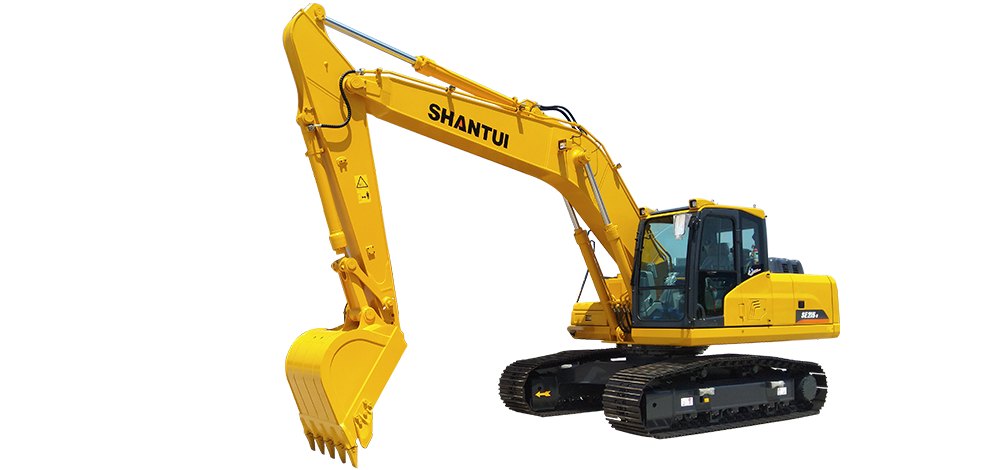
Heavy Machinery Blog: Heavyweight Excavators Deep-Dive Heavy Crawler Excavators Showdown Comprehensive Directory & Technical Specifications Guide Explore the technical benchmarks, operational capabilities, and powertrain configurations of modern heavy-duty crawler excavators. Click on any model below to jump directly to its complete dynamic specifications sheet. SE220 Excavator A highly versatile, 21-ton utility class excavator configured for urban infrastructure and precise earthwork manipulation. View Tech Specs → SE350 Excavator A 35-ton mid-heavy champion engineered for rapid cycles, bulk material handling, and structural mass excavations. View Tech Specs → SE380 Excavator Heavy duty quarrying layout optimized with a reinforced chassis platform and high-torque performance for granite breaking. View Tech Specs → SE470 Excavator A 46-ton pure mining giant built to endure extreme load-bearing configurations with immense structural fortification. View Tech Specs → SE500 Excavator The heavy-weight flagship variant sporting raw common-rail power arrays, massive bucket capabilities, and brutal digging breakout limits. View Tech Specs → Comprehensive Engineering Specs Breakdown SE220 Specifications Utility Class (21.9T) The SE220 marks the gold standard for standard multi-purpose utility tasks. Equipped with specialized throttle percentage control, it coordinates hydraulic response dynamically based on live component stress parameters. Parameter Value / Specification Operating Weight 21,900 kg (21.9 Tons) Engine Model Cummins B5.9-C (Tier 2 / Stage II) Rated Engine Power 112 kW (150 HP) @ 1950 rpm Standard Bucket Capacity 1.05 m³ Bucket Digging Force 127 kN (ISO) Max. Digging Depth 6,490 mm Max. Digging Reach 9,865 mm Travel Speed (High/Low) 5.1 / 3.3 km/h ↑ Back to Listing Grid SE350 Specifications Medium-Heavy Class (35.2T) Engineered for rapid loading environments, the SE350 employs variable axial piston systems to smoothly coordinate structural mass balance, limiting boom-drop fatigue while preserving accelerated cycle turnarounds. Parameter Value / Specification Operating Weight 35,200 kg (35.2 Tons) Engine Model Cummins LTA 10-C Rated Engine Power 184 kW (247 HP) @ 1700 rpm Standard Bucket Capacity 1.57 – 2.22 m³ Bucket Digging Force 196 kN (20,000 kg) Max. Digging Depth 7,620 mm Max. Reach at Ground 11,220 mm Hydraulic Pump Flow 2 x 280 L/min ↑ Back to Listing Grid SE380 Specifications Heavy Duty Quarry Class (36T) Tailored with explicit attention toward extreme rock-quarrying applications, this unit features ultra-fortified chassis frames and high-efficiency positive-flow hydraulic loops that prioritize breakthrough torque over loose terrain. Parameter Value / Specification Operating Weight 36,000 kg (36 Tons) Engine Model Isuzu GH-6HK1X (Turbocharged) Rated Engine Power 212 kW (284 HP) @ 2000 rpm Standard Bucket Capacity 1.4 – 3.5 m³ (HD Scoop options) Bucket Digging Force 235 kN / 320 kN (Boosted) Max. Digging Depth 7,050 mm Max. Digging Reach 10,780 mm Hydraulic Pump Flow 2 x 320 L/min ↑ Back to Listing Grid SE470 Specifications Mass Mining Class (46.8T) A massive layout configured directly for large-scale mining operations and deep-strata structural excavation. The structural platform features integrated double-support lower rollers and fully enclosed crawler track links. Parameter Value / Specification Operating Weight 46,800 kg (46.8 Tons) Engine Model Cummins QSM11 (High-Pressure Common Rail) Rated Engine Power 250 kW (335 HP) @ 2000 rpm Standard Bucket Capacity 2.2 m³ (Max range up to 2.5 m³) Bucket Digging Force 288.5 kN Max. Digging Depth 7,815 mm Max. Digging Distance 12,040 mm Hydraulic System Flow 2 x 360 + 27 L/min (Kawasaki System) ↑ Back to Listing Grid SE500 Specifications Flagship Excavation Class (49.5T) The peak performer of the lineup, optimized to deliver maximum structural yield across high-volume open-pit mining environments. Employs optimized electronic injection maps alongside heavy-duty rock-handling bucket designs. Parameter Value / Specification Operating Weight 49,500 kg (49.5 Tons) Engine Model Weichai P13H / Cummins QSM11 Variant Rated Engine Power 280 kW – 562 kW (Configuration Dependent) Standard Bucket Capacity 2.8 – 3.6 m³ Bucket Digging Force 305 kN / 340 kN Max. Digging Depth 7,420 mm Max. Digging Reach 11,730 mm Travel Speed (High/Low) 5.9 / 3.6 km/h ↑ Back to Listing Grid © 2026 Heavy Machinery Hub. Technical specifications provided for commercial indexing.
Shantui Bulldozer vs Caterpillar: Which Offers Better Value for Mining Operations?
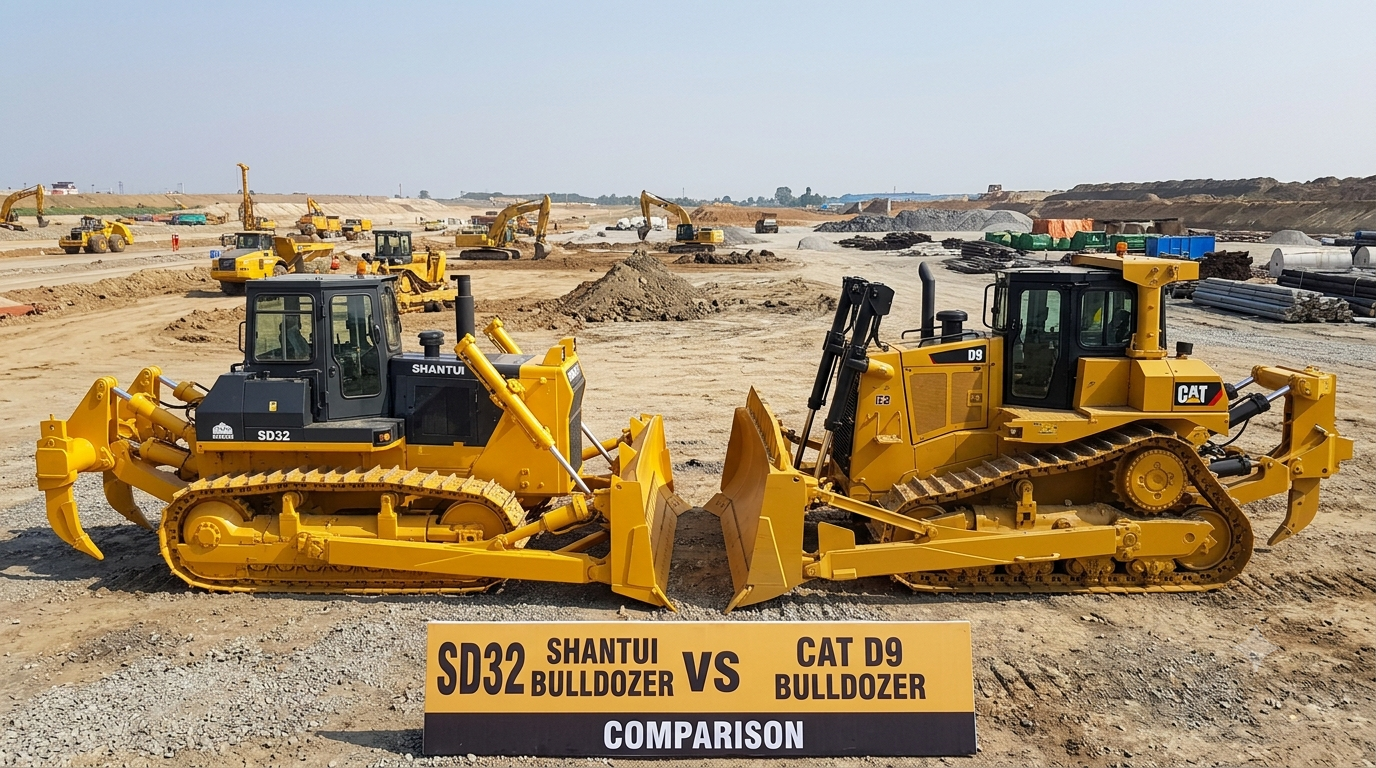
Shantui Bulldozer vs Caterpillar: Mining Operations Value Analysis Shantui Bulldozer vs Caterpillar: Which Offers Better Value for Mining Operations? When you’re outfitting a mining fleet, the bulldozer you choose affects your bottom line for the next decade — not just on the invoice, but in fuel burn, downtime, parts costs, and resale value. Two names come up constantly in these conversations: Shantui and Caterpillar (CAT). This guide compares the two head-to-head using actual spec-class data and a full total cost of ownership (TCO) calculation, so you can size a machine and run the numbers yourself before you buy. Note on figures: Specs below are class-representative ranges for large mining dozers (~350-450 hp). Confirm exact figures against the current spec sheet for the specific model/configuration you’re quoting — engine tier, blade type, and undercarriage option all shift these numbers. Spec-Class Comparison: Large Mining Dozer (350–450 HP Class) Spec Shantui SD32 Class CAT D9 Class Net power ~320–350 hp (238–261 kW) ~370–405 hp (276–302 kW) Operating weight ~40,000–43,000 kg ~48,000–50,000 kg Blade capacity (SU/S blade) ~9.5–11.0 m³ ~10.7–13.3 m³ Ground pressure ~0.85–0.95 kg/cm² ~0.80–0.95 kg/cm² Fuel tank capacity ~600–650 L ~800–870 L Fuel consumption (avg loaded) ~28–34 L/hr ~32–38 L/hr Undercarriage service life (design target) ~8,000–10,000 hrs ~10,000–12,000 hrs List price (approx., FOB) 55–65% of CAT equivalent Baseline (100%) What this tells you technically: Power-to-weight ratio matters more than raw horsepower for cycle time. Shantui’s SD32-class sits around 8.0–8.7 hp/tonne; the CAT D9-class runs closer to 7.7–8.4 hp/tonne. These are close enough that cycle times on standard dozing passes (ripping, pushing, grading) are comparable within a single-digit percentage — not a material productivity gap for most mine-site applications. Blade-to-power ratio (blade capacity ÷ net power) is a rough proxy for material moved per hour at a given fuel burn. Both classes land in a similar 0.027–0.030 m³/hp band, meaning material-moving efficiency per horsepower is broadly equivalent. Ground pressure is nearly identical across both, so flotation on soft mine-bench material is not a meaningful differentiator. Fuel Cost Calculation (Per Machine, Per Year) Use this formula to model your own fuel cost: Annual fuel cost = Fuel consumption (L/hr) × Operating hours/year × Fuel price ($/L) Worked example (2,000 operating hours/year, diesel at $1.10/L — adjust to your local price): Shantui (31 L/hr avg): 31 × 2,000 × $1.10 = $68,200/year CAT (35 L/hr avg): 35 × 2,000 × $1.10 = $77,000/year Difference: ~$8,800/year lower fuel cost on Shantui, roughly proportional to the ~11% lower average consumption in this class comparison. Over a 10-year operating life, that’s ~$88,000 in fuel savings alone — before accounting for purchase price or maintenance. Maintenance Cost Calculation A standard industry benchmark for large dozer scheduled maintenance (filters, fluids, ground-engaging tools, undercarriage wear items) is $8–14 per operating hour for CAT-class machines, and $6–10 per operating hour for Shantui-class machines, reflecting lower OEM parts pricing. Annual maintenance cost = Maintenance rate ($/hr) × Operating hours/year Worked example (2,000 hrs/year, mid-range rate): Shantui ($8/hr): 8 × 2,000 = $16,000/year CAT ($11/hr): 11 × 2,000 = $22,000/year Difference: ~$6,000/year, or ~$60,000 over 10 years. Undercarriage Replacement — A Major Line Item Undercarriage (track chains, rollers, idlers, sprockets) is typically the single largest wear-cost component on a dozer and commonly runs 15–25% of a machine’s original purchase price per replacement, needed roughly every 8,000–12,000 hours depending on ground conditions. At 2,000 hrs/year, that’s one undercarriage replacement every 4–6 years — so budget for 1–2 replacements across a 10-year working life, scaled to each machine’s purchase price (this is where CAT’s higher upfront cost compounds, since 20% of a larger number is a larger absolute cost). Full 10-Year TCO Model Assumptions used below: 2,000 hrs/year operation, $1.10/L diesel, actual Shantui SD32 purchase price of $275,000, illustrative CAT D9-class price for comparison, one undercarriage replacement at year 5. Cost Component Shantui SD32 (actual price) CAT D9-class (illustrative) Purchase price $275,000 $370,000 Fuel (10 yrs) $682,000 $770,000 Scheduled maintenance (10 yrs) $160,000 $220,000 Undercarriage replacement (1x, ~20% of price) $55,000 $74,000 Total 10-yr cost of ownership $1,172,000 $1,434,000 Estimated resale value at year 10 (~15% CAT / ~8% Shantui of original price) $22,000 $55,500 Net 10-yr cost (TCO − resale) $1,150,000 $1,378,500 Net result: Even after giving CAT full credit for stronger resale retention, the Shantui SD32 comes out ~16.6% cheaper over a 10-year working life in this model — roughly $228,500 in savings per unit. Multiply that across a 5-unit fleet and the gap becomes a ~$1.14M total cost difference. CAT figures above remain illustrative for comparison purposes — swap in an actual competitive quote from your market if you have one, and the Shantui column will stay accurate at the confirmed $275,000 price point. Which Should You Choose? Choose CAT if resale liquidity in a mature secondary market outweighs a 20%+ TCO premium for you, or your operating region has significantly better CAT parts lead times than Shantui. Choose Shantui if you’re running machines to full depreciation, optimizing for lowest cost-per-operating-hour, or scaling a multi-unit fleet where the per-unit savings compound quickly. For most mining and heavy-construction operations running equipment on a full working-life cycle rather than a short resale cycle, the TCO math favors Shantui by a wide and calculable margin. Frequently Asked Questions How do I calculate total cost of ownership for a dozer myself? Sum purchase price + (fuel rate × hours/year × years) + (maintenance rate × hours/year × years) + expected undercarriage replacements, then subtract estimated resale value at your planned sell/retire year. Use your actual quoted price and local fuel cost rather than the illustrative figures above. What’s a normal fuel consumption rate for a large mining dozer? For 350–450 hp class dozers running loaded dozing cycles, expect roughly 28–38 liters/hour depending on load factor, blade type, and ground conditions. Ask your dealer for load-factor-adjusted consumption data from the specific model’s spec sheet. How often does undercarriage need replacing on a mining dozer? Typically every 8,000–12,000 operating hours, though abrasive ground conditions (hard rock, high-silica material)
Shantui SD90 Bulldozer Review: Specs, Features & a Real-Life Mining Case Study
Heavy Equipment Reviews Bulldozer Buying Guide Shantui SD90 Bulldozer Review: Specs, Features & a Real-Life Mining Case Study Last updated: July 2026 If you follow the large-dozer segment, the Shantui SD90-C5 is hard to miss. Marketed as one of the largest bulldozers to come out of China, it was built to go head-to-head with the class-leading machines from Caterpillar and Komatsu in the toughest waste-dump and overburden-stripping jobs on earth. In this review, we break down the SD90’s real specifications, what makes it tick, and — most importantly — how it actually performs in the field, backed by a documented case study from a large open-pit gold mine. 708 kW Rated Power (≈960 HP) 106.2 t Operating Weight 39 m³ Blade Capacity -40°C Cold-Climate Rated What Is the Shantui SD90-C5? The SD90-C5 is Shantui’s flagship large bulldozer, purpose-built for high-intensity mining, quarrying, and large-scale earthmoving. It sits at the top of Shantui’s bulldozer range and is powered by a dedicated Cummins engine paired with an electronically controlled transmission that allows operators to preset gear ranges for different working conditions. Shantui pairs this with what it calls a “K-type suspension four wheels and one track” undercarriage, designed to improve ground adaptability and extend component life on rough mining terrain. The machine is fitted with a semi-U blade and can be optioned with a coal-scoop attachment and a heavy single-tooth ripper, both built from high-strength steel to withstand abrasive, rocky ground. Shantui positions the SD90 specifically for “extremely harsh mining conditions,” and the spec sheet backs that positioning up. The Shantui SD90-C5 features a massive high-capacity semi-U blade designed for high-tonnage mining applications. Shantui SD90-C5 Full Specifications Parameter Value Operating Weight 106,260 kg Engine Brand Cummins (QST30) Rated Power / Speed 708 kW / 2,100 rpm (~960 hp) Overall Dimensions (L×W×H) 11,500 × 5,265 × 4,590 mm Track Center Distance 2,770 mm Track Shoe Width 710 mm Ground Contact Length 4,520 mm Fuel Tank Capacity 1,638 L Blade Type Semi-U Blade Blade Capacity 39 m³ Emissions Standard EU Stage IIIA Source: Shantui Global — SD90-C5 official product page Key Features That Stand Out Purpose-Built Power & DrivetrainThe SD90 uses a dedicated Cummins powerplant rated at roughly 960 horsepower, matched to an electronic transmission with preset gear selection. This combination is aimed squarely at consistent, high-torque pushing rather than raw top speed — exactly what waste-dump and overburden work demands. ServiceabilityShantui centralizes filters and service points to cut routine maintenance time, and the SD90 includes an onboard intelligent diagnostic system that monitors machine health in real time — a feature that matters enormously in remote mine sites where unplanned downtime is expensive. Operator ComfortThe cab is sealed and pressurized against dust, with a layout designed for wide sightlines over the blade. Independent equipment reviewers who have inspected Shantui’s large dozer cabs note that noise is kept close to EU comfort limits, which is a meaningful upgrade over older-generation Chinese dozers. Mining-Grade AttachmentsThe semi-U blade, optional coal scoop, and reinforced single-shank ripper are all built from high-strength steel. Combined with heavy-duty track shoes, the undercarriage is engineered to survive abrasive rock and high-impact loading rather than just soft dirt. Real-Life Case Study: SD90 at a Large Open-Pit Gold Mine Shantui documented a deployment of multiple SD90 units at a major open-pit gold mine, where the mine operator had been struggling with two recurring problems: high operating costs and slow parts availability for its existing bulldozer fleet on waste-dump duty. The Challenge Waste-dump operations at large open-pit mines are relentless — dozers run near-continuously, pushing overburden across long distances in abrasive, often sub-zero conditions. Any drop in machine availability directly translates into lost production and higher cost per ton moved. The Solution Shantui deployed several high-horsepower SD90 units equipped with the same high-output engine, reinforced drivetrain, and intelligent control systems described above. The machines were run on long daily cycles to match the mine’s near-continuous operating schedule. The Results 95% mechanical availability across the deployed fleet 21-hour daily operating cycles sustained on waste-dump duty 30% efficiency improvement compared to the previous fleet setup Reliable operation down to -40°C, confirming the cold-climate design claims Over $150,000 in annual cost savings for the mine operator The performance results were strong enough that the mine placed repeat orders for additional SD90 units, and the deployment is now referenced by Shantui as a benchmark for high-latitude, high-intensity mining efficiency. Source: Shantui Global — “SD90 Bulldozer Application Case at a Large Open-Pit Gold Mine” What Owners and Dealers Are Saying Independent equipment dealers echo the manufacturer’s positioning. Heavy-equipment supplier CamaMach, which sells the SD90 to international buyers, highlights the machine’s V-shaped, direct-injection turbocharged engine with intercooling as a key contributor to strong, consistent power alongside reasonable fuel consumption, and points to the modular design that allows for simpler on-site assembly and disassembly during major servicing. Trade listings from Chinese export suppliers corroborate the same core numbers found on Shantui’s own site — 708 kW rated power, a 106,260 kg operating weight, and a fully sealed cab engineered to keep in-cab noise near 80 dB, in line with EU regulations. Pros and Cons Pros Class-leading power output for its category (~960 hp) Proven 95% availability in real mining deployment Cold-weather rated to -40°C Centralized, easy-access maintenance points Real-time intelligent diagnostics reduce unplanned downtime Mining-grade blade, ripper, and undercarriage options Lower acquisition cost versus Tier-1 Western competitors Cons EU Stage IIIA emissions rating may not meet the strictest regional regulations Parts network is less mature than Caterpillar/Komatsu in some regions Resale value data is still limited given the machine’s shorter market history Massive footprint (11.5 m long) requires careful transport and site planning Who Should Consider the Shantui SD90? The SD90 is not a general-purpose construction dozer — it’s built for large open-pit mining, quarrying, and heavy overburden-stripping operations where machines run long shifts in abrasive, extreme-climate conditions. Fleet operators evaluating total cost of ownership rather than sticker price alone will find the documented case study numbers —