
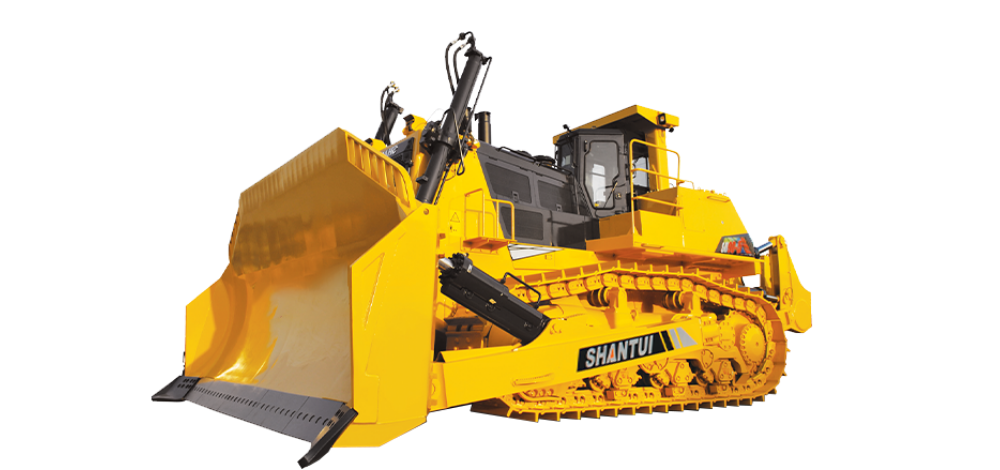
Shantui Bulldozer Reliability: A Field Review After Years of Real-World Use
If you’ve spent any time shopping the used heavy equipment market, you’ve probably run into Shantui. The Chinese manufacturer has become impossible to ignore — you’ll see Shantui equipment for sale on nearly every import dealer’s lot, often at 20–40% below the price of a comparable Caterpillar or Komatsu machine. But price alone doesn’t tell you whether a machine will still be running in five years. This review pulls together operator field experience, common failure points, and how Shantui stacks up against the brands contractors already trust, so you can decide whether a Shantui bulldozer belongs in your fleet.
Who Is Shantui, Anyway?
Shantui Construction Machinery traces its roots back to a state-owned Chinese manufacturer founded in 1980, and it has since grown into one of the world’s larger heavy equipment producers by volume, with bulldozers as its flagship product line. The company also builds excavators, wheel loaders, road rollers, and motor graders, but bulldozers remain what it’s best known for internationally.
A key detail for reliability: Some of Shantui’s earlier and mid-range dozer designs share DNA with Komatsu platforms, a legacy of past technology-transfer agreements. That heritage shows up in the drivetrain layout and general mechanical simplicity of models like the SD16 and SD22, which is part of why long-time owners describe them as straightforward to work on.
Shantui Bulldozer Reliability: What Field Experience Actually Shows
This is the part most buyers actually want to know, and the honest answer is “it depends more on maintenance discipline than on the badge on the hood.”
The Good News From Operators
- Durability: Owners who’ve run older Shantui dozers for two decades or more report that most of the trouble they’ve encountered has been ordinary wear and tear rather than catastrophic failures.
- Serviceability: The mechanical layout on the mid-size models (SD16/SD22 range) is simple enough that a competent bush mechanic can diagnose and fix most problems without dealer support.
- Structural Integrity: Undercarriage and structural components generally hold up well in rough terrain, according to job-site feedback from mining and earthmoving operations.
Where Problems Show Up
- Overheating: Transmission overheating is one of the most commonly reported issues, particularly when operators run non-approved hydraulic fluid or skip scheduled fluid changes.
- Hydraulics: Sluggish blade response shows up in the same maintenance-related bucket — it’s more often a hydraulic oil or filter issue than a design flaw.
- Parts Risk: Parts authenticity is a recurring theme. Because Shantui parts get counterfeited in some markets, machines serviced with non-genuine components are far more prone to premature failure.
Component-Level Troubleshooting
On engine, transmission, and steering-clutch systems, issues follow a fairly formulaic pattern: rough running when cold usually traces back to air in the hydraulic system, fuel starvation, or filter blockage, while power loss when hot points toward the torque converter, gearbox, steering clutch, or brake system.
The practical takeaway: Shantui reliability is real, but it’s conditional. Stick to the recommended 250-hour initial service and 500-hour comprehensive inspection intervals, use genuine parts and approved hydraulic oil, and the failure modes people complain about mostly disappear.
Shantui Machinery Lineup: Where the SD22 and SD90 Fit
Shantui’s dozer range spans from compact 17-ton machines up to some genuinely enormous mining-class iron, and understanding where a given model sits helps set realistic expectations.
Shantui SD22 (The Workhorse)
This is the workhorse of the mid-range lineup, running roughly a 162 kW engine and an operating weight around 23 tons. It’s positioned as the versatile all-rounder: strong enough for foundation and earthmoving work, but still maneuverable and simple enough for smaller contractors to own and maintain without a large service department. If you’re looking at Shantui heavy equipment for the first time, the SD22 is usually the sensible entry point.
Shantui SD90 (The Heavyweight Flagship)
This is the other end of the spectrum entirely. The SD90-C5 is Shantui’s flagship large-class bulldozer, tipping the scales at over 106 tonnes with a Cummins-sourced engine rated around 708 kW (roughly 950 hp), putting it in the same weight class as machines like the Caterpillar D11. It’s built for large open-pit mines and major earthmoving projects, not general contracting work. Features like an electronically controlled transmission and full-cab monitoring reflect that it’s aimed at large fleet operators rather than owner-operators.
Between those two sits the rest of the range — SD16 for light work, SD32 for large-scale mining and earthmoving that doesn’t need SD90-class size — giving buyers a genuinely broad set of options depending on job scope.
Shantui vs Caterpillar: The Real Trade-Off
This comparison comes up constantly, and it’s worth being direct about it rather than picking a side.
| Category | Caterpillar Wins | Shantui Wins |
|---|---|---|
| Technology & Control | More advanced electronic grading and blade-control systems. | Mechanical simplicity that makes field repairs easier when isolated. |
| Financials | Stronger resale value and a predictable used-equipment market. | Purchase price is routinely 20–40% lower than an equivalent Cat. |
| Support Network | Deeper dealer and parts networks in most Western markets. | Lower cost-per-hour of ownership for self-reliant operators. |
The honest summary most experienced buyers land on: if your operation is running high-production mining or infrastructure work with a big service budget and needs the latest automated grading tech, Caterpillar’s ecosystem still generally justifies the premium. If you’re a smaller contractor or working in a region where you’ll be doing your own wrenching, a Shantui bulldozer can do the same job for meaningfully less money, provided you commit to proper maintenance.
Buying Used Shantui Equipment: What to Check First
If you’re shopping listings for used Shantui equipment, a few checks go a long way toward avoiding reliability headaches:
-
Verify Service History: Ask for maintenance records, specifically whether the 250-hour and 500-hour service intervals were followed.
-
Check Parts Authenticity: A machine serviced exclusively with genuine Shantui parts is a materially safer bet than one with an unknown parts trail.
-
Map Local Logistics: Confirm a nearby parts network. Shantui has expanded its global parts distribution significantly, but regional coverage still varies.
-
Stress Test Under Load: Inspect the transmission and hydraulics closely. A test run under heavy load will reveal overheating or sluggish blade response quickly.
-
Calculate TCO: Compare total cost of ownership, not just sticker price, against a similarly aged Cat or Komatsu machine — factoring in expected parts availability and resale.