
Shantui Bulldozer Reliability: A Field Review | Heavy Equipment Insights Field Reviews Shantui Bulldozer Reliability: A Field Review After Years of Real-World Use Heavy Equipment Editorial • July 17, 2026 • 6 min read If you’ve spent any time shopping the used heavy equipment market, you’ve probably run into Shantui. The Chinese manufacturer has become impossible to ignore — you’ll see Shantui equipment for sale on nearly every import dealer’s lot, often at 20–40% below the price of a comparable Caterpillar or Komatsu machine. But price alone doesn’t tell you whether a machine will still be running in five years. This review pulls together operator field experience, common failure points, and how Shantui stacks up against the brands contractors already trust, so you can decide whether a Shantui bulldozer belongs in your fleet. Who Is Shantui, Anyway? Shantui Construction Machinery traces its roots back to a state-owned Chinese manufacturer founded in 1980, and it has since grown into one of the world’s larger heavy equipment producers by volume, with bulldozers as its flagship product line. The company also builds excavators, wheel loaders, road rollers, and motor graders, but bulldozers remain what it’s best known for internationally. A key detail for reliability: Some of Shantui’s earlier and mid-range dozer designs share DNA with Komatsu platforms, a legacy of past technology-transfer agreements. That heritage shows up in the drivetrain layout and general mechanical simplicity of models like the SD16 and SD22, which is part of why long-time owners describe them as straightforward to work on. Shantui Bulldozer Reliability: What Field Experience Actually Shows This is the part most buyers actually want to know, and the honest answer is “it depends more on maintenance discipline than on the badge on the hood.” The Good News From Operators Durability: Owners who’ve run older Shantui dozers for two decades or more report that most of the trouble they’ve encountered has been ordinary wear and tear rather than catastrophic failures. Serviceability: The mechanical layout on the mid-size models (SD16/SD22 range) is simple enough that a competent bush mechanic can diagnose and fix most problems without dealer support. Structural Integrity: Undercarriage and structural components generally hold up well in rough terrain, according to job-site feedback from mining and earthmoving operations. Where Problems Show Up Overheating: Transmission overheating is one of the most commonly reported issues, particularly when operators run non-approved hydraulic fluid or skip scheduled fluid changes. Hydraulics: Sluggish blade response shows up in the same maintenance-related bucket — it’s more often a hydraulic oil or filter issue than a design flaw. Parts Risk: Parts authenticity is a recurring theme. Because Shantui parts get counterfeited in some markets, machines serviced with non-genuine components are far more prone to premature failure. Component-Level Troubleshooting On engine, transmission, and steering-clutch systems, issues follow a fairly formulaic pattern: rough running when cold usually traces back to air in the hydraulic system, fuel starvation, or filter blockage, while power loss when hot points toward the torque converter, gearbox, steering clutch, or brake system. The practical takeaway: Shantui reliability is real, but it’s conditional. Stick to the recommended 250-hour initial service and 500-hour comprehensive inspection intervals, use genuine parts and approved hydraulic oil, and the failure modes people complain about mostly disappear. Shantui Machinery Lineup: Where the SD22 and SD90 Fit Shantui’s dozer range spans from compact 17-ton machines up to some genuinely enormous mining-class iron, and understanding where a given model sits helps set realistic expectations. SD22 Shantui SD22 (The Workhorse) This is the workhorse of the mid-range lineup, running roughly a 162 kW engine and an operating weight around 23 tons. It’s positioned as the versatile all-rounder: strong enough for foundation and earthmoving work, but still maneuverable and simple enough for smaller contractors to own and maintain without a large service department. If you’re looking at Shantui heavy equipment for the first time, the SD22 is usually the sensible entry point. SD90 Shantui SD90 (The Heavyweight Flagship) This is the other end of the spectrum entirely. The SD90-C5 is Shantui’s flagship large-class bulldozer, tipping the scales at over 106 tonnes with a Cummins-sourced engine rated around 708 kW (roughly 950 hp), putting it in the same weight class as machines like the Caterpillar D11. It’s built for large open-pit mines and major earthmoving projects, not general contracting work. Features like an electronically controlled transmission and full-cab monitoring reflect that it’s aimed at large fleet operators rather than owner-operators. Between those two sits the rest of the range — SD16 for light work, SD32 for large-scale mining and earthmoving that doesn’t need SD90-class size — giving buyers a genuinely broad set of options depending on job scope. Shantui vs Caterpillar: The Real Trade-Off This comparison comes up constantly, and it’s worth being direct about it rather than picking a side. Category Caterpillar Wins Shantui Wins Technology & Control More advanced electronic grading and blade-control systems. Mechanical simplicity that makes field repairs easier when isolated. Financials Stronger resale value and a predictable used-equipment market. Purchase price is routinely 20–40% lower than an equivalent Cat. Support Network Deeper dealer and parts networks in most Western markets. Lower cost-per-hour of ownership for self-reliant operators. The honest summary most experienced buyers land on: if your operation is running high-production mining or infrastructure work with a big service budget and needs the latest automated grading tech, Caterpillar’s ecosystem still generally justifies the premium. If you’re a smaller contractor or working in a region where you’ll be doing your own wrenching, a Shantui bulldozer can do the same job for meaningfully less money, provided you commit to proper maintenance. Buying Used Shantui Equipment: What to Check First If you’re shopping listings for used Shantui equipment, a few checks go a long way toward avoiding reliability headaches: ✓ Verify Service History: Ask for maintenance records, specifically whether the 250-hour and 500-hour service intervals were followed. ✓ Check Parts Authenticity: A machine serviced exclusively with genuine Shantui parts is a materially safer bet than one with an unknown parts
Shantui SD90 Bulldozer Review: Specs, Features & a Real-Life Mining Case Study
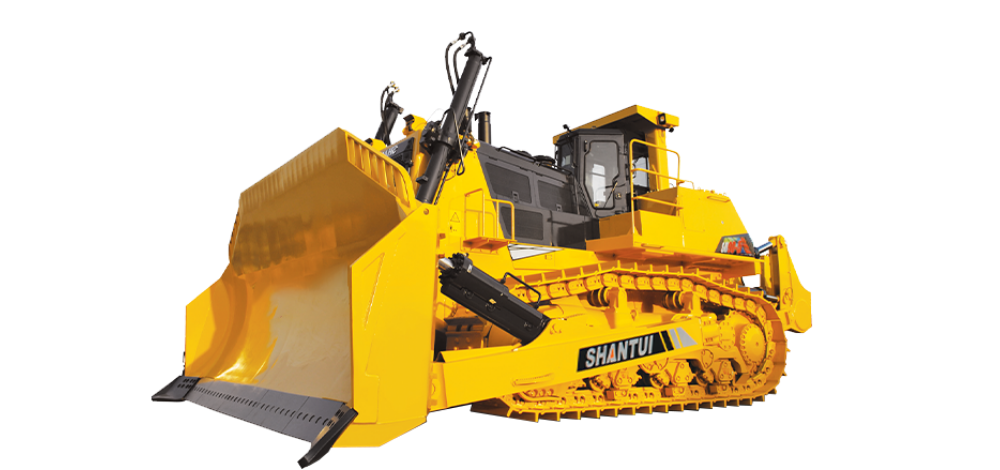
Heavy Equipment Reviews Bulldozer Buying Guide Shantui SD90 Bulldozer Review: Specs, Features & a Real-Life Mining Case Study Last updated: July 2026 If you follow the large-dozer segment, the Shantui SD90-C5 is hard to miss. Marketed as one of the largest bulldozers to come out of China, it was built to go head-to-head with the class-leading machines from Caterpillar and Komatsu in the toughest waste-dump and overburden-stripping jobs on earth. In this review, we break down the SD90’s real specifications, what makes it tick, and — most importantly — how it actually performs in the field, backed by a documented case study from a large open-pit gold mine. 708 kW Rated Power (≈960 HP) 106.2 t Operating Weight 39 m³ Blade Capacity -40°C Cold-Climate Rated What Is the Shantui SD90-C5? The SD90-C5 is Shantui’s flagship large bulldozer, purpose-built for high-intensity mining, quarrying, and large-scale earthmoving. It sits at the top of Shantui’s bulldozer range and is powered by a dedicated Cummins engine paired with an electronically controlled transmission that allows operators to preset gear ranges for different working conditions. Shantui pairs this with what it calls a “K-type suspension four wheels and one track” undercarriage, designed to improve ground adaptability and extend component life on rough mining terrain. The machine is fitted with a semi-U blade and can be optioned with a coal-scoop attachment and a heavy single-tooth ripper, both built from high-strength steel to withstand abrasive, rocky ground. Shantui positions the SD90 specifically for “extremely harsh mining conditions,” and the spec sheet backs that positioning up. The Shantui SD90-C5 features a massive high-capacity semi-U blade designed for high-tonnage mining applications. Shantui SD90-C5 Full Specifications Parameter Value Operating Weight 106,260 kg Engine Brand Cummins (QST30) Rated Power / Speed 708 kW / 2,100 rpm (~960 hp) Overall Dimensions (L×W×H) 11,500 × 5,265 × 4,590 mm Track Center Distance 2,770 mm Track Shoe Width 710 mm Ground Contact Length 4,520 mm Fuel Tank Capacity 1,638 L Blade Type Semi-U Blade Blade Capacity 39 m³ Emissions Standard EU Stage IIIA Source: Shantui Global — SD90-C5 official product page Key Features That Stand Out Purpose-Built Power & DrivetrainThe SD90 uses a dedicated Cummins powerplant rated at roughly 960 horsepower, matched to an electronic transmission with preset gear selection. This combination is aimed squarely at consistent, high-torque pushing rather than raw top speed — exactly what waste-dump and overburden work demands. ServiceabilityShantui centralizes filters and service points to cut routine maintenance time, and the SD90 includes an onboard intelligent diagnostic system that monitors machine health in real time — a feature that matters enormously in remote mine sites where unplanned downtime is expensive. Operator ComfortThe cab is sealed and pressurized against dust, with a layout designed for wide sightlines over the blade. Independent equipment reviewers who have inspected Shantui’s large dozer cabs note that noise is kept close to EU comfort limits, which is a meaningful upgrade over older-generation Chinese dozers. Mining-Grade AttachmentsThe semi-U blade, optional coal scoop, and reinforced single-shank ripper are all built from high-strength steel. Combined with heavy-duty track shoes, the undercarriage is engineered to survive abrasive rock and high-impact loading rather than just soft dirt. Real-Life Case Study: SD90 at a Large Open-Pit Gold Mine Shantui documented a deployment of multiple SD90 units at a major open-pit gold mine, where the mine operator had been struggling with two recurring problems: high operating costs and slow parts availability for its existing bulldozer fleet on waste-dump duty. The Challenge Waste-dump operations at large open-pit mines are relentless — dozers run near-continuously, pushing overburden across long distances in abrasive, often sub-zero conditions. Any drop in machine availability directly translates into lost production and higher cost per ton moved. The Solution Shantui deployed several high-horsepower SD90 units equipped with the same high-output engine, reinforced drivetrain, and intelligent control systems described above. The machines were run on long daily cycles to match the mine’s near-continuous operating schedule. The Results 95% mechanical availability across the deployed fleet 21-hour daily operating cycles sustained on waste-dump duty 30% efficiency improvement compared to the previous fleet setup Reliable operation down to -40°C, confirming the cold-climate design claims Over $150,000 in annual cost savings for the mine operator The performance results were strong enough that the mine placed repeat orders for additional SD90 units, and the deployment is now referenced by Shantui as a benchmark for high-latitude, high-intensity mining efficiency. Source: Shantui Global — “SD90 Bulldozer Application Case at a Large Open-Pit Gold Mine” What Owners and Dealers Are Saying Independent equipment dealers echo the manufacturer’s positioning. Heavy-equipment supplier CamaMach, which sells the SD90 to international buyers, highlights the machine’s V-shaped, direct-injection turbocharged engine with intercooling as a key contributor to strong, consistent power alongside reasonable fuel consumption, and points to the modular design that allows for simpler on-site assembly and disassembly during major servicing. Trade listings from Chinese export suppliers corroborate the same core numbers found on Shantui’s own site — 708 kW rated power, a 106,260 kg operating weight, and a fully sealed cab engineered to keep in-cab noise near 80 dB, in line with EU regulations. Pros and Cons Pros Class-leading power output for its category (~960 hp) Proven 95% availability in real mining deployment Cold-weather rated to -40°C Centralized, easy-access maintenance points Real-time intelligent diagnostics reduce unplanned downtime Mining-grade blade, ripper, and undercarriage options Lower acquisition cost versus Tier-1 Western competitors Cons EU Stage IIIA emissions rating may not meet the strictest regional regulations Parts network is less mature than Caterpillar/Komatsu in some regions Resale value data is still limited given the machine’s shorter market history Massive footprint (11.5 m long) requires careful transport and site planning Who Should Consider the Shantui SD90? The SD90 is not a general-purpose construction dozer — it’s built for large open-pit mining, quarrying, and heavy overburden-stripping operations where machines run long shifts in abrasive, extreme-climate conditions. Fleet operators evaluating total cost of ownership rather than sticker price alone will find the documented case study numbers —